California CountiesCalifornia State Association of Counties
In the News

Counties Shoulder $4.3 billion in Cuts, IOUs - $776 million in IOUs Coming in July Alone

July 1 - California counties face $4.3 billion in cuts, deferrals, and IOUs under current budget proposals due to the Legislature's failure to enact corrective measures by the June 30 deadline - a combination that will push some counties to the fiscal brink and will hinder their ability to provide vital services to residents.

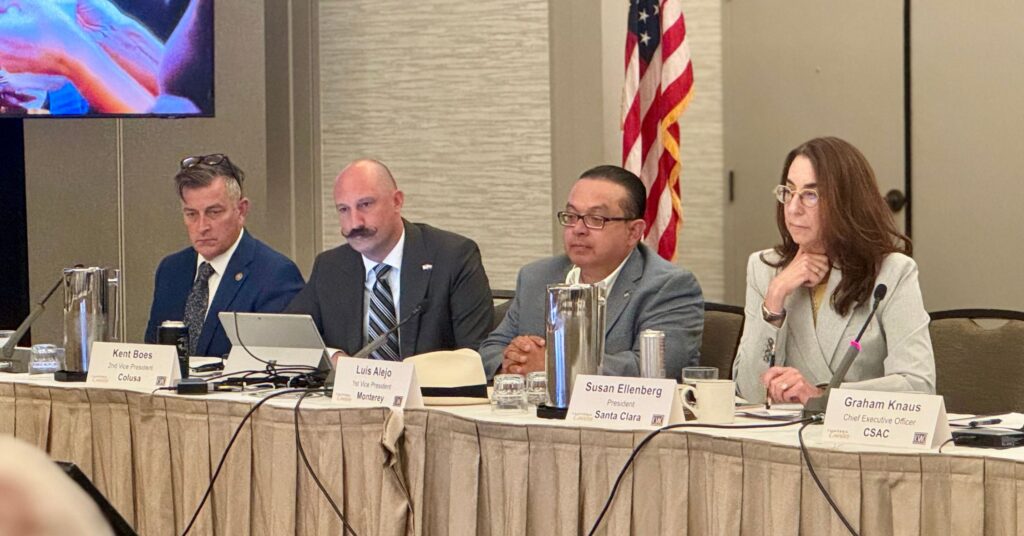
"We are putting the Governor, Legislature and residents we serve on notice that we cannot uniformly ensure the delivery of critical health, public safety and other vital services in the current fiscal environment," said Gary Wyatt, Imperial County Supervisor and President of the California State Association of Counties. "Let's be clear, services will be disrupted at the local level, and the state's inability to resolve its budget issues is severely impeding counties' ability to meet the needs of the people we serve."

State Controller John Chiang is scheduled to start issuing IOUs Thursday for CalWORKs grants, administration of social services, mental health services and alcohol and drug treatment programs. Counties are mandated by state and federal law to provide social services and cannot issue IOUs to recipients of those programs. Essentially, the state has pushed its cash crisis down to counties. In all likelihood, counties will be forced to conserve cash by paring down services, such as libraries, parks, or road maintenance, or by issuing their own registered warrants to vendors and contractors in order to meet federal and state requirements for the provision of social services programs.  Of additional concern is the potential lack of willing banks and lenders to cash IOUs.

In addition to the pending IOUs, counties are extremely worried about current budget proposals that shift a large part of the state's fiscal crisis to counties. The proposed raid of $1.7 billion in local gas tax funds and cost shifts in county-administered state health and human services programs will put many counties in dire fiscal straits.

Continue reading this press release.

Click here for a chart outlining the cumulative $4.3 billion impact to counties. 


Final Countdown... to Cash Implosion

June 30 - The Governor and Legislative leadership negotiated over the weekend and late into Monday to try to avert the looming cash crisis. The Governor has until midnight tonight to sign bills that would produce $3.3 billion in education savings in the 2008-09 fiscal year. The state can no longer capture those education savings once the new fiscal year begins tomorrow, and if the current fiscal year closes without the Legislature taking action, the state's budget deficit will grow by another $3 billion - pushing the state's budget shortfall to the $27 billion mark.

To technically meet today's midnight deadline, the Legislature must take action to pass bills by 10 p.m. to allow enough time to prepare and process the measures for delivery to the Governor's desk. Clearly, this constraint further shortens the time available to negotiate a budget solution.

Continue reading this update, which also includes information on Governor's "reform" demands and impending IOUs, in the Executive Director's Watch.   

 
Local Transportation Funds Remain in Jeopardy

June 26 - Unfortunately, more than $2 billion in county and city transportation revenue remains very much in play in the budget debate. A significant amount of this loss is from the local portion of the gas tax or Highway User Tax Account (HUTA). The HUTA proposal is not a loan or suspension, but an outright takeaway, which is contained in budget trailer bills SB 72 and AB 190 (identical bills).
 
The duration of the take is for two years, and is equal to nearly $1.7 billion shared equally between counties and cities. CSAC and the League of California Cities adamantly oppose this action that will result in significant job losses to both the public and private sector and will compromise our ability to meet critical public safety needs.
 
Continue reading this article in the latest CSAC Legislative Bulletin.