

Beyond the Benefits: The County Connection for California’s Veterans
Back to News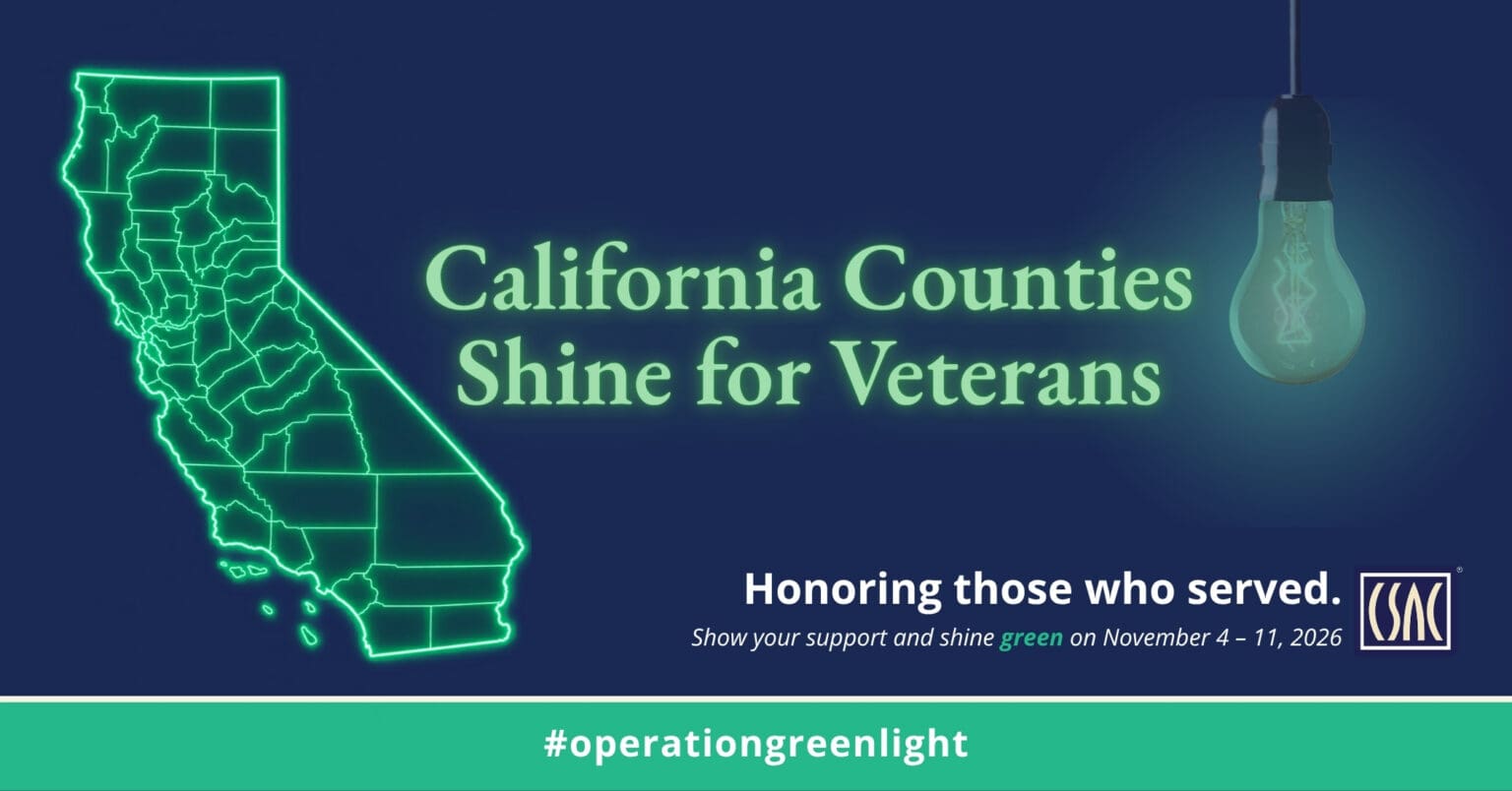
As California recognizes Veterans Day and Operation Green Light, County Veterans Service Officers are demonstrating the power of local government to serve those who served.
California’s County Veterans Service Officers (CVSOs) helped secure $737 million in new benefits for veterans and their families last year. Behind that number are thousands of veterans who received assistance navigating a complex federal system to access the benefits they earned through military service.
But filing claims is only part of the job.
Across California, CVSOs serve as a vital connection between veterans, their families and the services available in their communities. From housing assistance and behavioral health care to food security and reentry services, these county professionals help veterans navigate challenges that extend far beyond benefits.
Morgan Boyd, San Luis Obispo County Veterans Service Officer and President of the California Association of County Veterans Service Officers (CACVSO), describes this work as a chain of support.
“I look at a veteran’s life as a link of chain. Every single one of our programs that touches that veteran’s life is a link. None of us is more important than the other, because if one of those links breaks, that veteran has to start all over again.”
That chain is being tested by increasingly complex challenges.
For many veterans, accessing benefits is far from straightforward. Older veterans may struggle with online systems, rural residents face transportation and service barriers, and others hesitate to seek assistance because of stigma or past experiences. Meanwhile, housing costs, behavioral health needs and the transition to civilian life create challenges that cannot be resolved through a benefits claim alone.
CVSOs are also confronting a growing industry of private companies charging veterans thousands of dollars for claims assistance that accredited county representatives provide free of charge. Boyd described companies charging veterans $15,000 to $30,000 for services they could receive through their county.
CACVSO is working to address these challenges through state policy. The association has supported legislation to strengthen protections against predatory claims practices and improve the statewide CVSO system, including better data collection, coordination between offices and identification of underserved veteran populations.
These efforts come as county offices manage substantial workloads with limited state resources. California provides approximately $11 million annually in state support for CVSO operations, leaving counties responsible for much of the cost of staffing and delivering services.
Despite these pressures, CVSOs continue finding ways to do more through partnerships with county departments, nonprofits and community organizations. In San Luis Obispo County, Boyd’s office works with local partners to distribute approximately 2,000 pounds of food each month. Across California, CVSOs collaborate with behavioral health providers, homelessness response teams and jail reentry programs to connect veterans with services that extend far beyond benefits assistance.
These relationships are essential to keeping Boyd’s chain of support intact. And county leaders can help strengthen those connections.
When asked what advice he would give supervisors unfamiliar with their county’s veterans service office, Boyd’s response was simple: Invite your CVSO to coffee and ask what they’re doing.
As counties illuminate their buildings green for Operation Green Light this Veterans Day, the gesture is also an opportunity to recognize the people working year-round to support those who served.
“They really are some of the most dedicated public servants you will see,” Boyd said. “They don’t care if it’s a Saturday night and they get a phone call.”
Because supporting veterans takes more than one office or program. It takes every link in the chain.