

Counties Call on State Leaders to “Protect Our Safety Net” Ahead of Deep Federal Cuts
Back to News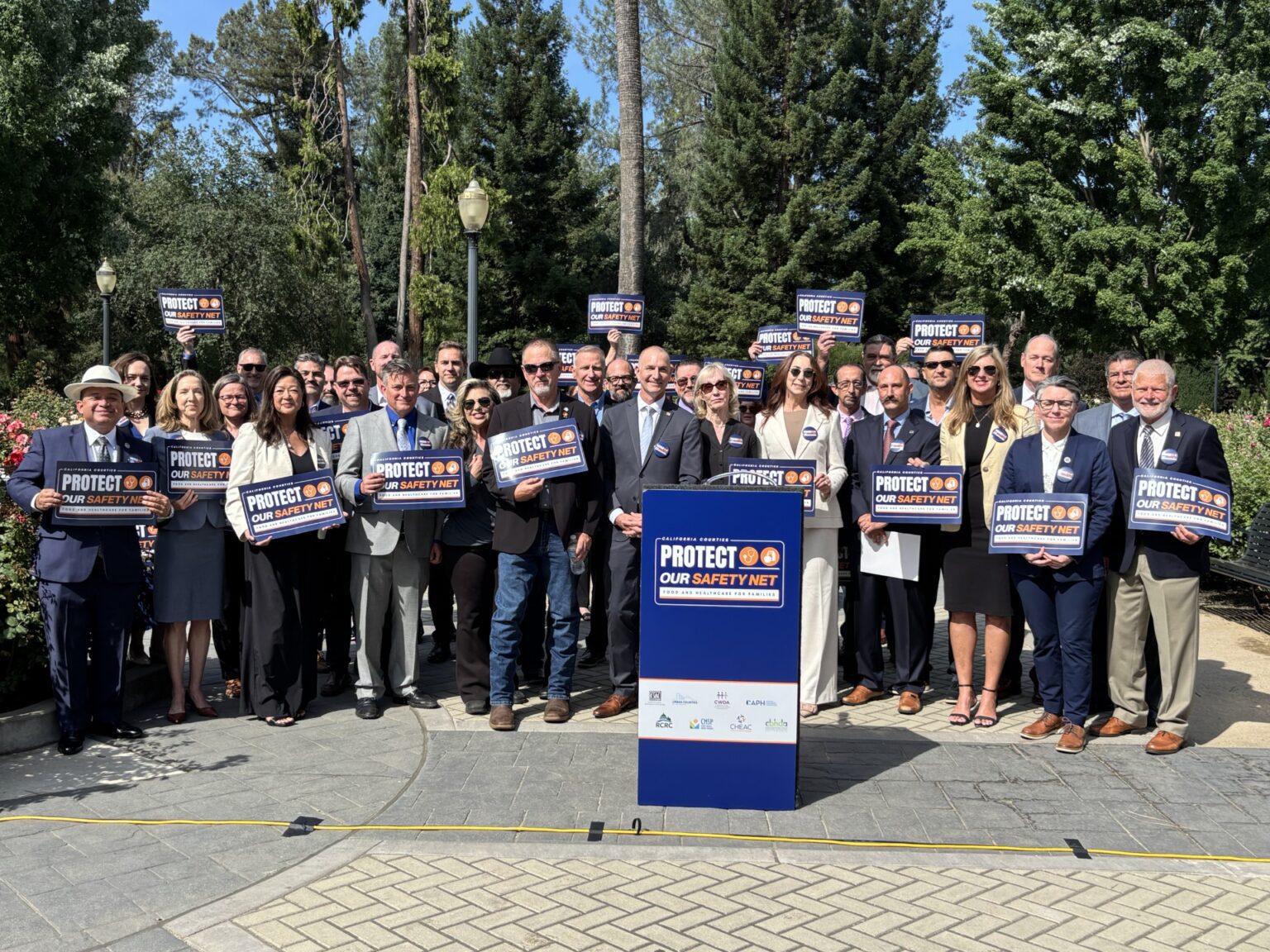
Sacramento, CA — County leaders from across California are calling on the Governor and Legislature to take urgent action to protect California’s safety net from the devastating impacts of H.R. 1.
“When people and our communities are in crisis, counties are the ones who answer the call,” said Santa Clara County Supervisor Susan Ellenberg, California State Association of Counties (CSAC) President. “We are calling on the state to partner with us to stabilize these systems before families are severely harmed. The scale and urgency of this crisis still has not been met.”
Dozens of county supervisors and members of the County Family gathered at the Capitol Rose Garden Wednesday morning with a plea for help on behalf of the communities they serve.
“Counties are going to do everything we can to protect our residents—but we can’t do it alone,” said Monterey County Supervisor Luis Alejo, CSAC First Vice President. “This is a choice for California, and we cannot afford to get this wrong. We can either follow in Washington’s footsteps and turn away from our residents, or we can step up and protect our communities.”
County officials warn that H.R. 1 will strip billions of dollars from health care, food assistance, public hospital systems, behavioral health, and other core safety net services while shifting massive new costs onto counties already stretched thin. Counties estimate the legislation will cost up to $9.5 billion annually.
“This is not some abstract policy debate that only affects people in Washington,” said Colusa County Supervisor Kent Boes, CSAC Second Vice President. “This is real. This is not red. This is not blue. This will affect every community in California, including my rural district in Colusa County.”
County leaders say the Governor’s May Revision falls far short of what is needed to address the scale of the crisis.
In response, counties are urging the state to approve a multi-year partnership that includes $1.1 billion in the upcoming budget and $2.5 billion the following year to stabilize critical local services, protect public hospitals, preserve access to Medi-Cal, maintain behavioral health services, and keep eligible Californians connected to Medi-Cal and CalFresh.