
CSAC Member Spotlight: Tuolumne County Supervisor Ryan Campbell
Back to News
When Supervisor Ryan Campbell drives up the hill to Crystal Falls, he knows he’s home. The pace changes. The air smells like cedar and sugar pine, and as he puts it, he can finally relax.
“I’m back home,” he says with a smile.
Home has always meant something specific to Supervisor Campbell, a rural community where people look out for each other, solve problems together, and most importantly, when something needs to get done, show up.
He grew up on a farm outside of Isleton on the Sacramento River Delta, in a town of around 800 people. His family grew corn and alfalfa, and his father was a farmer and ironworker, who was active in his community. From an early age, he learned that being part of a community came with an obligation to give back and serve. “You would step up and be a leader and give back,” he says, “because any kind of benefits that you get came from somewhere.”
That lesson has followed him throughout his career and would eventually shape not only how he chose to live, but also how he chose to serve.
After graduating from the University of North Carolina, Chapel Hill School of Journalism, he came home to California and began his career writing for newspapers. He worked at publications including the Stockton Record, Lodi News-Sentinel, and eventually the Union Democrat in Tuolumne County.
Journalism helped him form a foundation that he would later carry into public service: the ability to listen, ask questions, build relationships, and tell the truth, even when it was inconvenient.
Eventually, Supervisor Campbell wanted to do more than report on decisions being made, “I realized that I had to actually be the person who was making those decisions,” he says. “It wasn’t enough to sit on the sidelines and tell somebody what they need to do.”
That realization led him to serve in county government, where he found an opportunity to turn those instincts into action.
After working for Tuolumne County Behavioral Health, he took on a major challenge with the county’s Office of Emergency Services: the Tree Mortality Program.
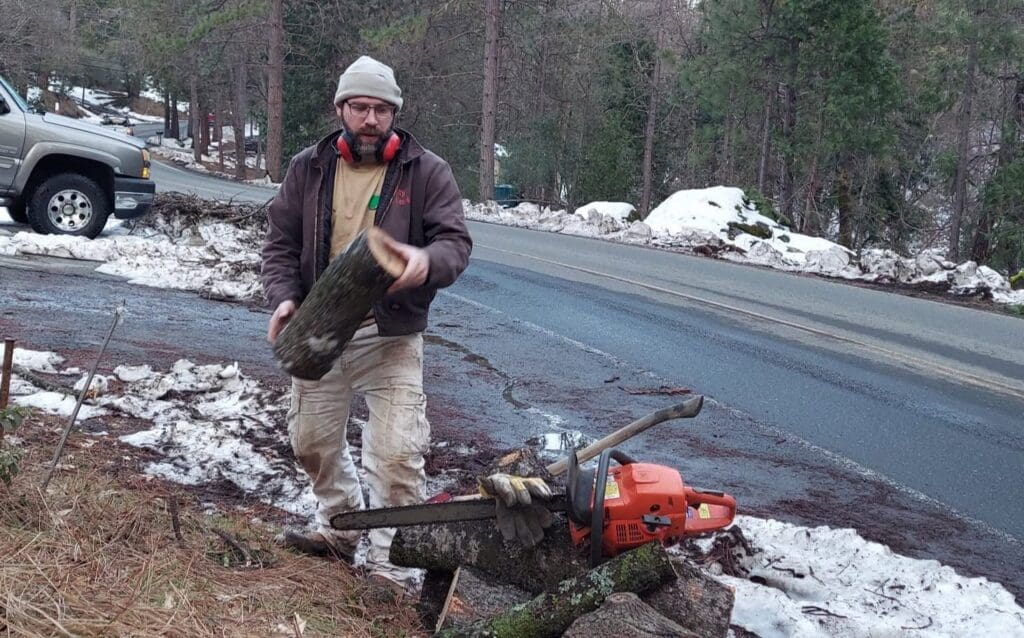
Beginning as a small effort to address dead trees following the bark beetle epidemic in 2015 grew into a sweeping forest health and fuels reduction program. That work brought together the county, U.S. Forest Service, timber industry, environmental interests, watershed experts, and property owners. That work also taught him one of the lessons that continues to guide his approach to public service. “You can’t do it by yourself,” he says, “you have to work with people, meet people where they’re at.”
That same collaborative approach has shaped his time on the Tuolumne County Board of Supervisors.
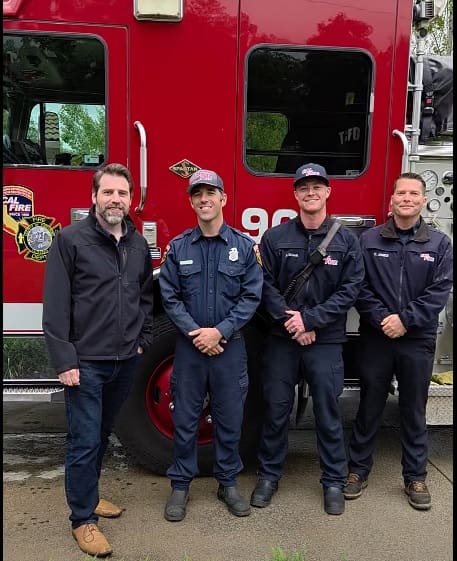
His major focus has been public safety, especially in a county where communities are surrounded by forests and separated by mountains and long distances. Through a SAFER Grant, Tuolumne County added three fire engines to areas where there were gaps in emergency response. These additional resources serve not only during wildfires but also for everyday emergencies that can be especially challenging in a rural county.
But Supervisor Campbell’s work isn’t limited to emergencies. He’s pushed for investments in roads, seeing reliable infrastructure as part of the foundation for economic development. He’s watched new small scale manufacturing businesses take root in his district, which have created higher paying jobs and new opportunities for young people who may have otherwise left their rural community.
“That’s one of the challenges we all face in rural communities… the opportunities for our school-aged kids are pretty limited, so a lot of them move away,” he says. For him, economic development is about creating the conditions for businesses and families to see a future and thrive in Tuolumne County.
Some of the projects that Supervisor Campbell is most proud of aren’t necessarily the biggest ones.
When he joined the Board of Supervisors, county libraries were operating with reduced hours and were facing potential closures. Today, the libraries are open six days a week and offer expanded programming for children and families.
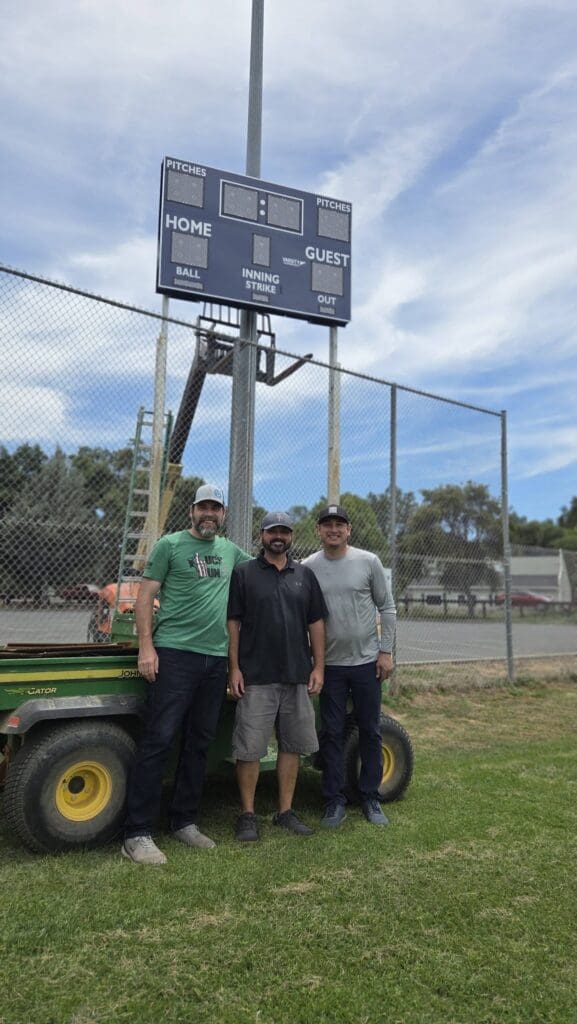
Then there is Standard Park, the county’s community sports complex, which he calls the “crown jewel of Tuolumne County.”
Over the years, the park began to show its age. Fences needed replacing; scoreboards didn’t work. Lighting needed improvements and grass needed attention. The community got involved; businesses, and residents contributed their time, materials, and expertise. Today, the park has new fencing, scoreboards, lighting, grass, and has a full calendar of community events planned.
For him, the transformation is more than improving the park; it’s about what can happen when government makes room for the people who want to contribute. “I want people to know that I’m contributing to my community,” he recalls one business owner telling him. That spirit is something he sees throughout Tuolumne County, “whenever you ask for help, people show up.”
That willingness to pitch in is also part of what makes the county feel home to him, and there are plenty of ways he participates outside the Board of Supervisors.
He is a self-described history nerd, with a collection of books covering Tuolumne County, Columbia, Soulsbyville, Sonora, Jamestown, and the Gold Rush era. During the two-hour drive to Sacramento, he listens to history podcasts, drawn to the patterns that connect decisions of the past with challenges of the present.
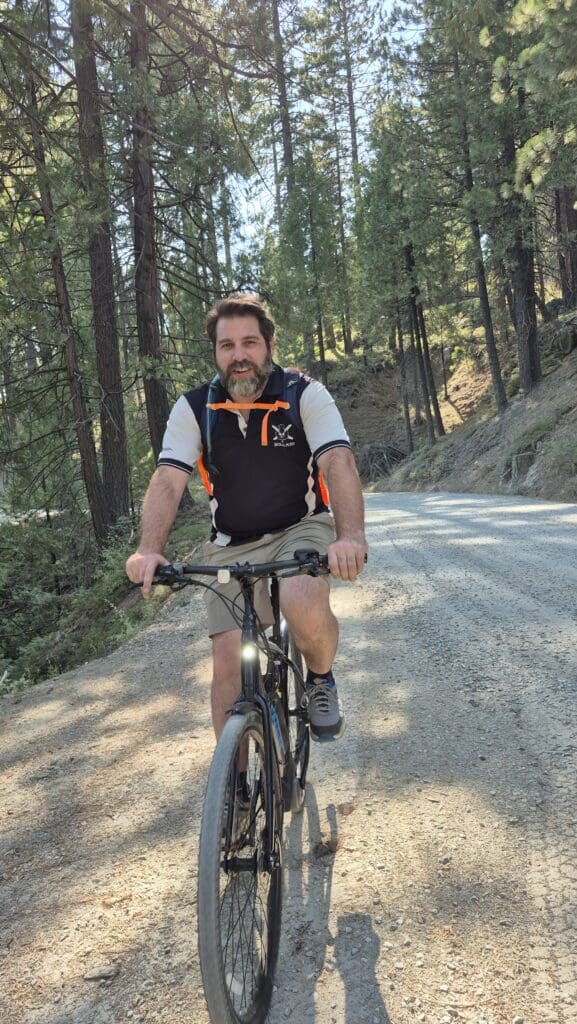
He is also a motorcycle enthusiast and has been riding since he was nine. More recently, he’s been exploring the county’s forest roads, including a trip to Cherry Lake by way of back roads most visitors never see.
And then there’s rugby.
After playing Division I rugby in college, he eventually returned to the sport years later with a group of former players in Tuolumne County. Today, he plays touch rugby with the Bark Beetles, whose team mascot is named “Bark Twain.”
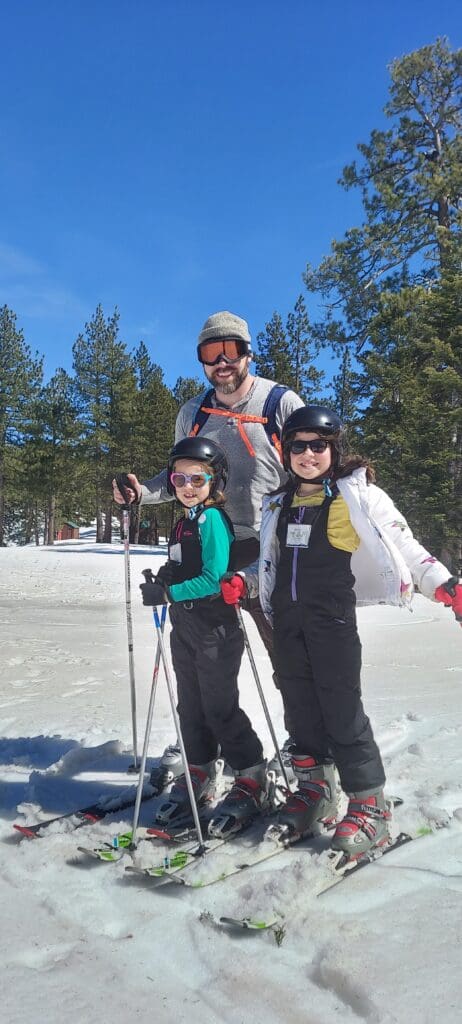
For all his interests and responsibilities, though, it is the landscape and the people of Tuolumne County that seem to bring everything back into focus. He talks about Crystal Falls, a waterfall he passes every day while driving his daughters to school. They have developed their own tradition of calling out “Crystal Falls!” whenever they see it.
Supervisor Campbell talks about Beardsley Lake, tucked into the high country, with blue water and tall cliffs that he describes as a miniature Yosemite Valley. And he practically salivates when he talks about Mean Lew’s BBQ. The hours are unpredictable, he laments, so you can’t always schedule a business lunch there. But if they’re open and the barbecue hasn’t sold out, he promises that it’s worth the trip.
His connection to Tuolumne County runs deeper than his role as an elected official. Supervisor Campbell and his wife are raising their family there. On weekends you can find him exploring its windy back roads that he knows like the back of his hand, or playing rough and tumble with his fellow Bark Beetles, or, if he is lucky, eating some Mean Lew’s barbecue.
“I got everything I need right here. It’s home.”