

Golden Mussels Are Here to Stay. How Are Counties Responding?
Back to News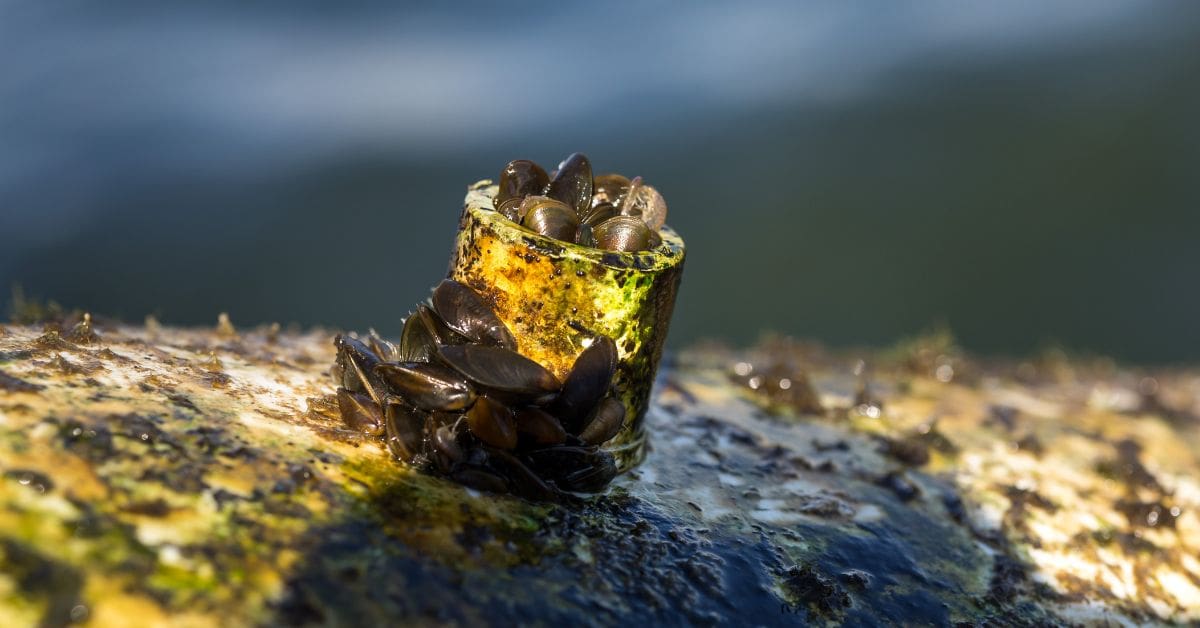
Golden mussels were first detected in the Port of Stockton in October 2024, and the invasive species has spread rapidly through the Sacramento-San Joaquin Delta, threatening drinking water systems, flood control infrastructure, agriculture, recreation and local economies.
Now, counties across California are racing to contain the damage and prepare from what comes next.
A threat moving beyond county lines
Native to China, golden mussels spread throughout parts of Asia and South America before arriving in California via ballast water discharged in the Port of Stockton. Since then, they have spread through the Delta and as far north as the Port of West Sacramento in Yolo County.
State officials expect them to continue multiplying along California’s interconnected waterways, underscoring a key challenge for counties: water does not stop at jurisdictional boundaries, so a problem in one region can quickly cascade into costly concerns elsewhere.
“We want to be prepared ahead of time because we are looking at the possibility of hundreds of millions of dollars in infrastructure being damaged if these mussels take hold[MJ1] ,” said Matthew Robinson, spokesperson for Sacramento County. “As long as we are talking to each other and everybody is listening and working with the state, we’re going to be able to get a heads-up on what’s coming.”
Though golden mussels haven’t entered Sacramento County yet, the county declared a local emergency to stay proactive and seek state assistance if needed. They followed in the footsteps of San Joaquin County, who was the first to declare an emergency, with Kern and Yolo counties also following suit.
Different waterways require different responses
While San Joaquin County is ground zero for the infestation, each county is confronting the issue through the lens of its unique geography and infrastructure.
For Lake County, the threat isn’t unfamiliar, as they’ve spent years managing zebra and quagga mussels.
From boat permitting and inspections to partnerships with CDFW on the statewide “Clean, Drain, Dry” campaign and mussel-sniffing dogs, Lake County has experience with prevention and mitigation.
Supervisor Jessica Pyska, who chairs CSAC’s Agriculture, Environment and Natural Resources Policy Committee, said the challenge is funding. Existing grant programs weren’t designed with golden mussels in mind, forcing Lake County to rely on General Fund dollars to expand prevention efforts while increasing permit fees and tournament costs to help offset expenses.
“This is a critical issue for all counties that have bodies of water,” said Supervisor Pyska. “The economic costs of invasive mussels are significant, threatening tourism, recreation and drinking water infrastructure. Prevention is essential to protecting our environment and our economy.”
In Kern County, the conversation looks different.
Golden mussels have primarily affected water conveyance systems that support agriculture, energy production and municipal water supplies. According to Kern County Assistant Chief Administrative Officer Stacy Kuwahara, local water districts have already reported spending more than $7 million on remediation, with projected annual costs exceeding $36 million. Kuwahara hopes the local emergency declaration will support reimbursement efforts through Cal OES.
“When you look at the invasive nature of the species and the way that water travels through the Delta and our other waterways, coordination between agencies is essential,” said Kuwahara.
A multifaceted issue
At first, San Joaquin County Supervisor Mario Gardea saw golden mussels as a recreational issue. That changed after a visit to McDonald Island.
The island depends on pumps that run for nearly half the day to remain above water. Those pumps, and therefore the irrigation infrastructure that supports agriculture and Northern California’s largest natural gas storage facility, are plagued with dense colonies of golden mussels.
Supervisor Gardea said that the county, water agencies, and farmers have spent more money than ever expected on mitigation. And the problem is only growing.
“I’m no scientist, but I’ve done enough homework on this to know that we’re beyond the point of eradicating them, at least in this area,” Gardea said. “They’re here to stay.”
The conversation, he said, has shifted toward mitigation and long-term funding.
Coordination is the only path forward
Counties aren’t in this alone; water districts, state agencies, reclamation districts, federal partners, and agricultural bodies all have a role to play.
San Joaquin County Supervisor Paul Canepa said one of the biggest lessons has been bringing together groups that do not typically work side by side.
“It’s getting folks together that haven’t ever worked together,” said Supervisor Canepa. “Boaters and farmers and water folks and the state… it’s like this thousand-piece puzzle.”
Golden mussels likely won’t be California’s last invasive species challenge. County leaders say climate change will only increase the risks, making today’s partnerships and mitigation efforts especially critical.